
Skip to content
All conceptsNorthstarBloom →

Quantum LearningSTEM · JEE · NEET

Master the concepts, understand the possibilities.

A STEM coaching institute built around one idea: students do not fail entrances for lack of information — they fail because nobody watched them solve. Concept diagnostics, problem labs and error analytics, engineered end to end.

  • Concept diagnostics before teaching
  • Problem labs, capped ratios
  • Error-tagged paper analysis
plane · ℝ²session 2026–27
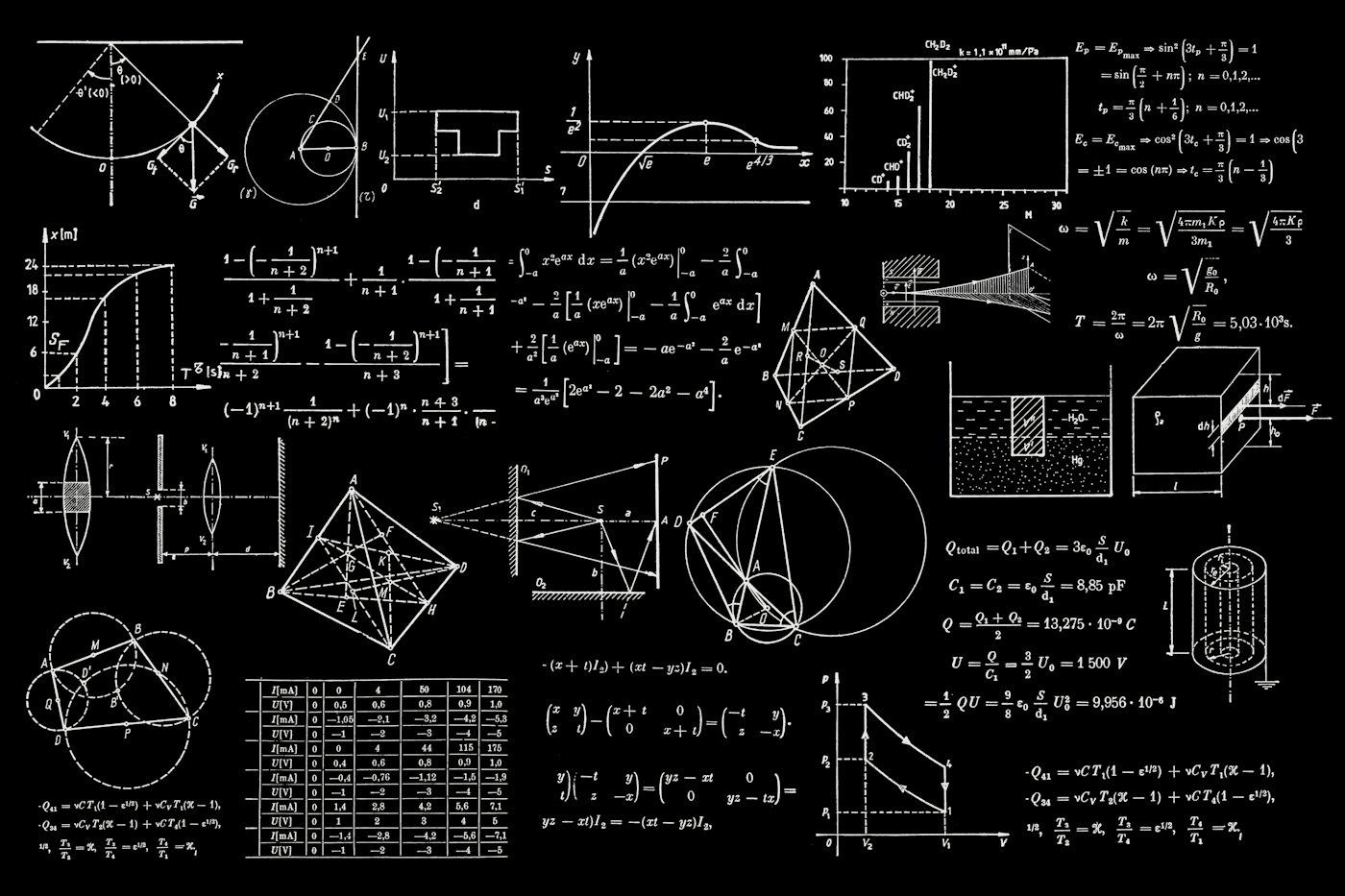
f(x)g(x)∫ f(x) dxxy
f(x) · concept curveg(x) · progress trend
Students solving mechanics problems during a Quantum Learning problem lab (demo image)

Problem lab · mechanics block (demo)

9 yrs

Teaching STEM for competitive exams

1,100+

Students mentored across batches

1 : 14

Mentor-to-student ratio in labs

40+

Graded papers in a full cycle

Illustrative figures for this design demo — not verified outcomes.

Subject architectures

Five subjects, five methods — one diagnostic language.

Each subject is taught with the method it actually requires. Switch between them to see the topic map a Quantum batch works against.

Module · Physics

Physics

Physics is taught as models, not formulas. Each chapter opens with the physical argument, then compresses it into the relations the examiner actually uses.

  • Kinematics and vector reasoning
  • Newtonian and Lagrangian mechanics
  • Rotational dynamics
  • Thermodynamics and kinetic theory
  • Ray and wave optics
  • Electromagnetic induction
  • Modern physics and nuclear decay
Students working through a mechanics problem at a Quantum Learning problem lab (demo image)

Physics lab (demo)

Topic maps are illustrative demo content — a live institute would publish its current syllabus coverage here.

The concept loop

Five stages, repeated until the exam feels familiar.

Every batch runs the same disciplined loop. The mentor sets the pace; the data decides the target.

  1. 01

    Map

    Concept diagnostics chart what a student already owns and what is genuinely missing, subject by subject.

  2. 02

    Model

    Concepts are built from first principles — diagrams, arguments and derivations — before any formula is memorised.

  3. 03

    Solve

    Guided problem labs put every student solving in the room while mentors circulate and correct method in real time.

  4. 04

    Analyse

    Graded work is tagged by error type, so the weekly plan targets patterns instead of rereading chapters.

  5. 05

    Simulate

    Full papers under exam conditions, with same-day debriefs that rewrite the next fortnight's plan.

The loop restarts every fortnight: a new map, a new target, a new simulation. Nothing in the year is improvised.

Why Quantum

Preparation engineered around evidence, not attendance.

Four commitments shape every batch — and each one is visible in the weekly routine of the classroom.

Students reviewing an error analysis on laptops during a Quantum Learning session (demo image)
  • Diagnostics before teaching

    No batch starts with a lecture. Every programme opens with a graded concept map, so teaching time goes to what is actually missing instead of what the chapter list assumes.

  • Problem labs, not lecture halls

    Sessions are built around solving in the room. Mentors circulate while students work, which makes confusion visible in week one instead of before the exam.

  • Error analytics after every paper

    Graded papers are tagged by error type — concept gap, method slip, calculation error, time pressure — so revision targets patterns rather than chapters.

  • One mentor thread through the year

    The mentor who maps the plan is the mentor who reviews it fortnightly. Continuity is what turns data into a decision instead of a dashboard.

Programmes

Five routes into the same exam hall.

Each programme shares the same diagnostic discipline and error analytics — they differ only in subject depth and the calendar you have.

Course 01

JEE Physics & Maths Intensive

A two-year, concept-first route for aspirants targeting JEE Main and Advanced, with physics and mathematics taught to the same depth.

  • First-principles mechanics and calculus tracks
  • Weekly problem labs with in-room solving
Duration
24 months · Class 11 to Class 12
Mode
Classroom + online mirror
Indicative demo fee
₹1,40,000 / year

Course 02

Advanced Mathematics Lab

A weekend enrichment lab for students who want mathematics beyond the syllabus — olympiad-flavoured problems with direct exam utility.

  • Combinatorics, number theory and geometry modules
  • Proof-writing and alternative-solution reviews
Duration
12 months · Weekend batches
Mode
Saturday problem lab + problem sets
Indicative demo fee
₹54,000 / year

Course 03

NEET Biology + Chemistry

Biology and chemistry held to exam-standard precision, with physics support so the full NEET paper is covered honestly.

  • NCERT-anchored recall structures for biology
  • Reaction-logic approach to organic chemistry
Duration
24 months · Class 11 to Class 12
Mode
Classroom + online mirror
Indicative demo fee
₹1,30,000 / year

Course 04

Coding & Computational Thinking

Python, data structures and algorithmic thinking for school students — taught with the same diagnostic discipline as the exam tracks.

  • Level 1: Python fundamentals and modelling
  • Level 2: Data structures and problem patterns
Duration
16 weeks per level · Three levels
Mode
Evening batches + project reviews
Indicative demo fee
₹28,000 / level

Course 05

Concept-Diagnostics Program

A three-week assessment cycle that maps a student's concept landscape before any programme is chosen.

  • Subject-wise concept mapping papers
  • Timed speed-and-accuracy measurement
Duration
3 weeks · Rolling intake
Mode
Supervised sittings + mentor report
Indicative demo fee
₹6,500 / cycle

Fees shown are indicative demo figures — a live institute would publish its current fee structure and policies in this section.

Mentors

Subject specialists who own a batch for the full year.

One mentor carries a batch through the year — the same voice in class, the same name on the review sheet.

Portrait of Rohan Deshpande, physics mentor (illustrative demo profile)

Head of Physics

Rohan Deshpande

M.Sc. Physics · 14 years of JEE mentoring (demo credential)

Rohan builds every physics chapter from the underlying model — free-body diagrams, field lines, energy arguments — before a single formula appears. Students leave his sessions able to reconstruct a relation they have forgotten, which is what exam pressure actually tests.

Mechanics, electrodynamics, modern physics

Portrait of Ananya Iyer, mathematics mentor (illustrative demo profile)

Head of Mathematics

Ananya Iyer

M.Sc. Mathematics · Olympiad mentor (demo credential)

Ananya treats mathematics as a language with grammar. Her labs make students prove the short-cut before they use it, so the method survives the exam hall even when the numbers change.

Calculus, coordinate geometry, combinatorics

Portrait of Sana Anand, biology and chemistry mentor (illustrative demo profile)

Head of Biology & Chemistry

Sana Anand

M.Sc. Biochemistry · NEET curriculum lead (demo credential)

Sana teaches biology as structured reading and chemistry as pattern logic. Her recall maps and reaction trees turn dense chapters into systems a student can navigate under a ninety-minute clock.

Physiology, organic reaction logic, physical chemistry

Portrait of Vikram Sethi, computing mentor (illustrative demo profile)

Head of Computing

Vikram Sethi

M.Tech · Industry engineer, 9 years mentoring (demo credential)

Vikram runs the computing track like a problem lab: short explanations, long solving time, and code reviews that name the one habit costing a student correctness — off-by-one errors, untested edge cases, or unmodelled data.

Python, data structures, algorithms

Mentor profiles are illustrative demo content created for this design concept.

Achievement stories

Results written as stories, not scoreboard noise.

Rank bands matter — but what changed matters more. Each story below names the work that moved the number.

Aarav S.

JEE Advanced · 2025 session (demo)

AIR 5XX band in the demo range

Aarav's mechanics were strong but his calculus speed capped the whole paper. A rebuilt integration track, alternate-day timing drills and an error log that named every skipped step moved his practice scores from the seventies into the nineties percentile band.

  • Calculus speed track
  • Error logging
  • Mock discipline

Ishita R.

NEET UG · 2025 session (demo)

6XX score band in the demo range

Ishita lost marks in physical chemistry to calculation slips, not concepts. Unit-checking habits, daily numerical sets and same-day analysis turned her most variable section into the steadiest part of the paper.

  • Numerical accuracy
  • Unit checks
  • Recall structures

Kabir M.

JEE Main · 2025 session (demo)

99.XX percentile band in the demo range

Kabir could solve almost anything given time, so the work was entirely about ordering. Section-wise timing drills and a rewritten attempt sequence gave him close to twenty minutes back in the final paper.

  • Attempt ordering
  • Speed drills
  • Selection sense

Tara V.

Coding olympiad · 2025 session (demo)

State-level selection in the demo range

Tara arrived from the computing track with clean Python but weak graph reasoning. Eight weeks of problem patterns — BFS, DP on trees, prefix sums — turned contest ratings from partial solves into full ones.

  • Graph patterns
  • Contest strategy
  • Proof of correctness

All ranks, scores and student names shown here are fictional demo placeholders, not verified achievements.

In their words

What families notice first is the honesty of the data.

The diagnostic report was the first honest document we received from any institute. It named three chapters costing marks — and the plan addressed exactly those three.
Nandini G.Parent of a Class 11 student (demo)
Problem labs changed how I study. Solving in the room, out loud, with a mentor watching, meant I stopped mistaking reading a solution for knowing one.
Rehan A.JEE aspirant (demo)
The error analytics are what convinced us. Every paper came back tagged by mistake type, so revision finally had a target instead of a mood.
K. SureshParent of a NEET aspirant (demo)

Quotes are illustrative demo content written for this design concept.

Admissions

Four steps from first call to first class.

No entrance test to enter the programme — only an honest diagnostic so the batch we recommend is the right one.

  1. Enquire

    Share the student's class, target exam and timeline through the form, a call or WhatsApp.

  2. Concept diagnostic

    A 60-minute supervised assessment across the target subjects establishes an honest starting map.

  3. Programme mapping

    A mentor recommends the programme, batch and revision calendar — and explains fees and schedules plainly.

  4. Enrol

    Confirm the seat, meet the mentor who owns the batch, and receive the diagnostic report with the first problem set.

Questions

Answers before you enquire.

The five things families ask us most often — answered plainly, including how this demo handles figures.

Admissions desk

Talk to a mentor before you decide.

Bring the student's class, target exam and timeline. We will recommend a programme and batch honestly — including when we are not the right fit.

Demo site: submitting the form stores nothing. It prepares a WhatsApp message you can choose to send yourself.

Request a callback

Tell us about the student and a Quantum counsellor will call you back.

Demo form — your details stay in your browser and are never uploaded. Submitting prepares a WhatsApp message you can send yourself.